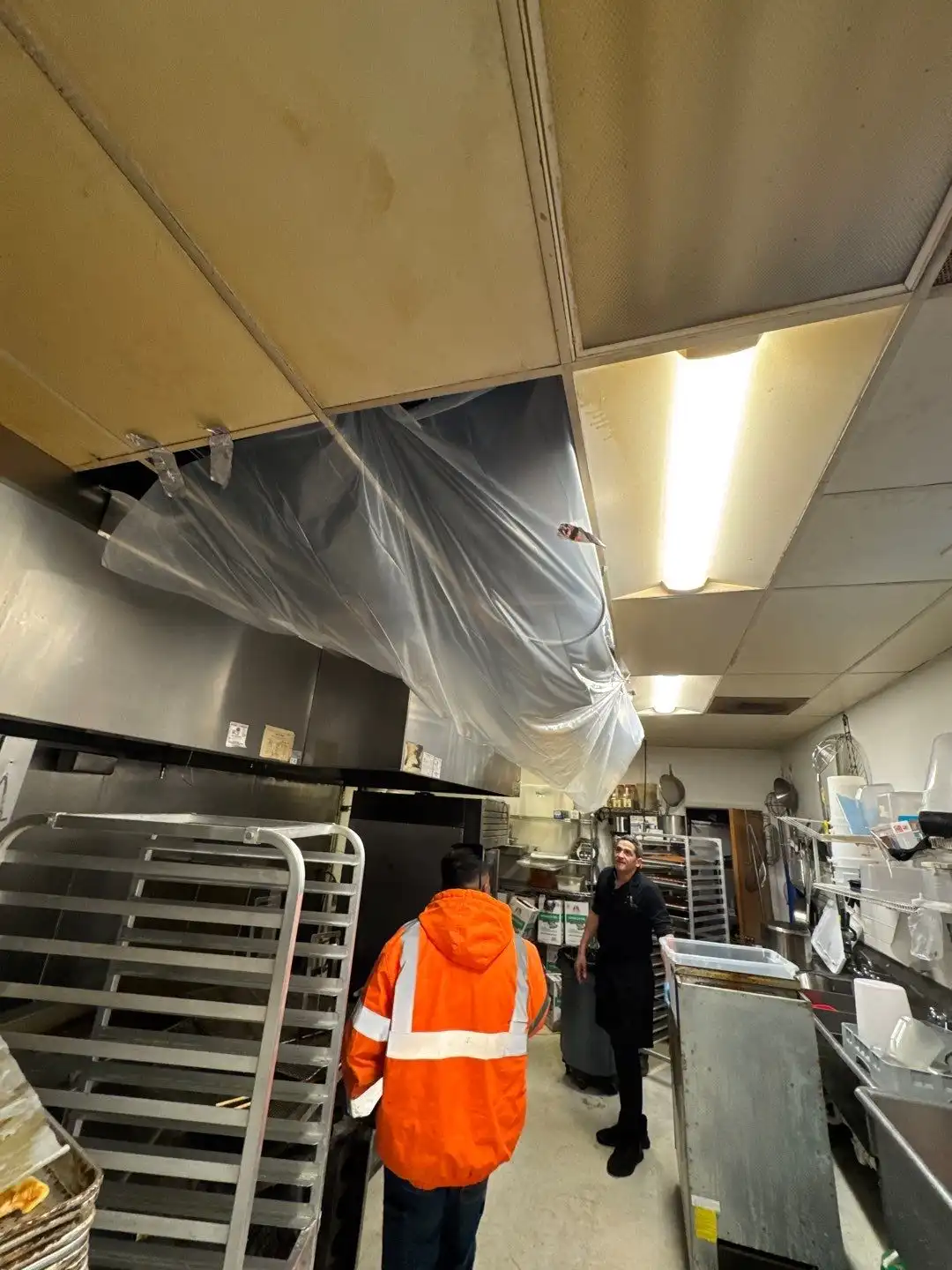
What commercial roof storm damage looks like
Storm damage to a commercial roof takes several forms, and for a Franklin facility owner, recognizing them helps you understand the situation and respond. Some damage is obvious, while some is subtle but still serious, which is why a professional assessment after a storm matters.
Wind damage
High winds can lift, tear, or peel back the roof membrane, damage flashings and edges, and in severe cases remove sections of the roof, opening the building to water. Wind damage is among the most common and serious storm damage. For a facility, wind damage can range from lifted or torn membrane to compromised edges and flashings, all of which break the roof's integrity and let water in. Even where the damage is not dramatic, wind can loosen seams and details, which is why a roof should be checked after a significant windstorm even if it looks intact from the ground.
Hail damage
Hail impacts can bruise, fracture, or puncture the membrane and damage surfacing and rooftop equipment, sometimes subtly, weakening the roof even where it does not immediately leak. Hail damage is often not obvious from the ground. For a Johnson County facility, hail damage may show as impact marks, bruising, or granule loss, and it can develop into leaks over time as the weakened areas fail. Because much hail damage is subtle or hidden, a professional inspection after a hailstorm is important to find the full extent, which a ground level look would miss on a commercial roof.
Debris and impact damage
Storms can drive debris, branches, or objects onto the roof, or cause trees or structures to fall on it, puncturing or crushing the membrane and creating openings for water. Impact damage is a direct breach. For a Franklin facility, debris and impact damage can range from punctures to significant structural damage where something large strikes the roof, all of which compromise the roof and admit water. Removing the debris and addressing the damage promptly is part of the emergency response, since an impact breach lets water in directly and the debris itself can cause further harm if left.
Water intrusion and active leaks
Often the first sign of storm damage a facility notices is water coming into the building, an active leak through the compromised roof that signals the roof has been breached. Active leaks demand immediate attention. For a facility, water intrusion after a storm means the roof has been damaged and is letting water in, threatening the structure, inventory, and operations below. The leak is both a symptom of the storm damage and an active source of further loss, which is why stopping it through emergency response is urgent once water appears inside the building.
Damage to drainage and details
Storms can clog or damage drainage and harm the roof's details, flashings, seams, and penetrations, in ways that compromise the roof's ability to shed water and keep it out. Detail and drainage damage can be less visible but serious. For a Johnson County facility, storm damage to the drainage or details can lead to ponding and leaks even where the main membrane seems intact, which is why a thorough post storm assessment checks these areas. Addressing damaged drainage and details is part of restoring the roof's integrity after a storm.
Hidden and developing damage
Not all storm damage is immediately visible, since weakened areas, compromised seals, and subtle membrane damage can exist without an obvious sign, developing into leaks later. Hidden damage is why inspection matters. For a Franklin facility, the absence of an obvious problem after a storm does not mean the roof escaped harm, since hidden damage can surface as leaks weeks later. A professional inspection after a significant storm finds the subtle and hidden damage that a casual look misses, giving an accurate picture of the roof's condition so nothing is left to worsen unnoticed.
Recognizing storm damage
Commercial roof storm damage shows as wind damage, hail impacts, debris and impact damage, water intrusion, damaged drainage and details, and hidden damage, some obvious and some subtle. For a facility owner, recognizing these forms helps you understand the situation, but because much storm damage is not obvious, a professional assessment after a storm is what reveals the full extent and what the roof needs.
It also helps to separate the two phases clearly, since stabilization and permanent repair serve different purposes and both are necessary. A Johnson County facility that understands the temporary protection stops the bleeding while the permanent repair restores the roof will neither panic that the tarp is inadequate nor mistake it for the finished job. The emergency response buys time; the permanent repair uses that time to fix the roof properly. Keeping both phases in view leads to a storm damaged roof that is protected immediately and restored durably, which is the goal.
The larger point about storm damage is that the cost of waiting almost always exceeds the cost of responding, since an open roof keeps letting water in and the damage compounds by the hour. A Franklin facility that calls for emergency response immediately contains the problem at its initial extent, while one that delays watches a localized breach become widespread damage to the roof, the structure, and the contents below. The single most important factor in how a storm emergency turns out is how fast the response begins, which is why acting at once matters so much.
Finally, the facilities that handle storms best are the ones prepared before the storm arrives, with a sound, maintained roof and an emergency roofer already identified. A facility that keeps its roof in good condition and knows who to call faces less damage and a faster response than one scrambling after the fact. Storm readiness is built in calm weather through maintenance and relationships, so that when a storm hits, the roof resists better and the response begins immediately, limiting the loss to the building and the operations it shelters.
It also helps to separate the two phases clearly, since stabilization and permanent repair serve different purposes and both are necessary. A Johnson County facility that understands the temporary protection stops the bleeding while the permanent repair restores the roof will neither panic that the tarp is inadequate nor mistake it for the finished job. The emergency response buys time; the permanent repair uses that time to fix the roof properly. Keeping both phases in view leads to a storm damaged roof that is protected immediately and restored durably, which is the goal.
Get your storm damaged roof assessed fast
Franklin Commercial Roofing assesses storm damaged Franklin commercial roofs quickly, finding the visible and hidden damage and responding to protect the building. Call (765) 676-3491 for a fast assessment of your storm damaged roof. A prompt, thorough assessment is what gets the emergency handled before the damage spreads.