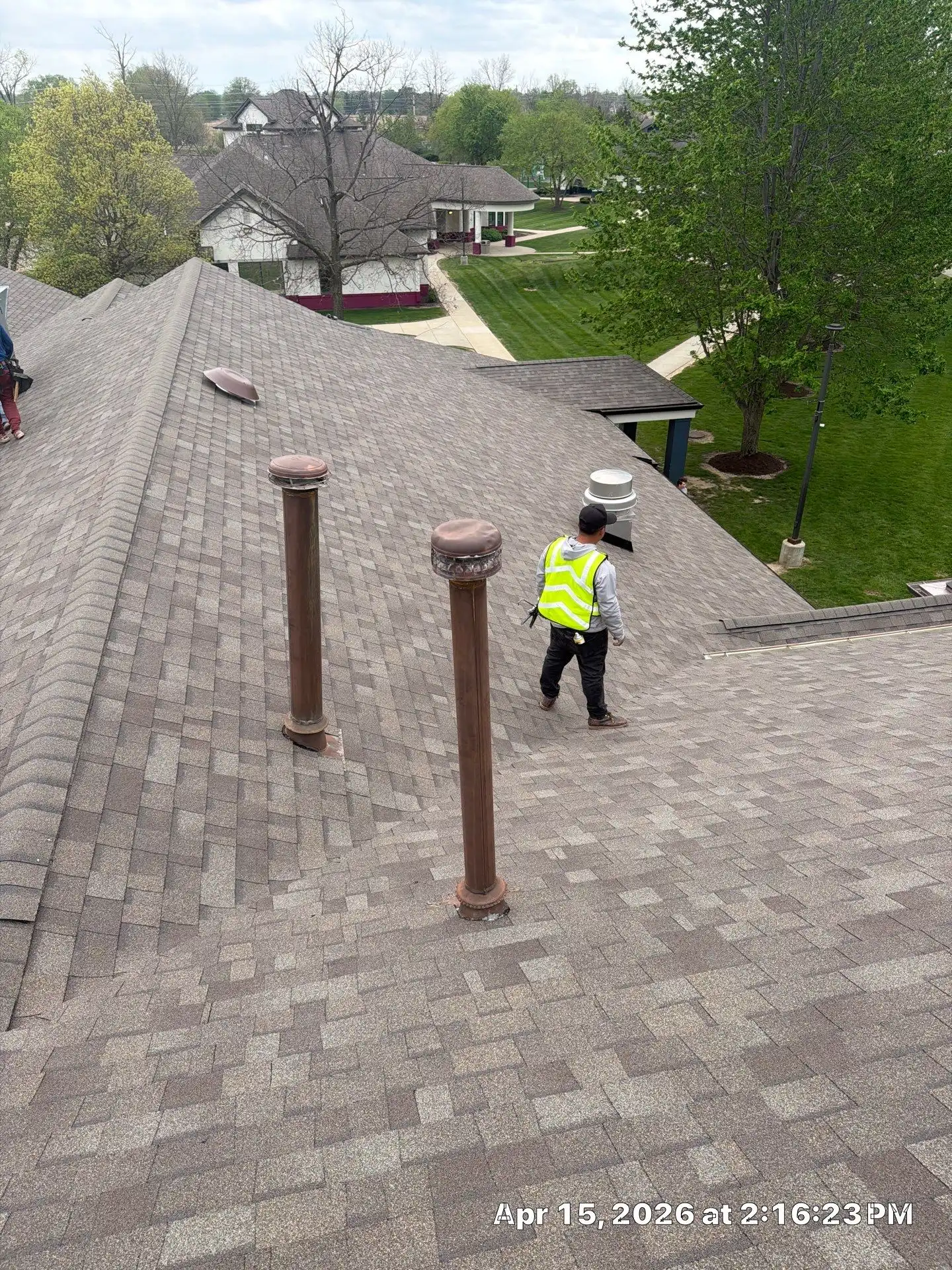
What is the average cost per square foot for flat roof replacement in Franklin?
For most commercial buildings in Franklin, full flat roof replacement runs between $7 and $16 per square foot installed. A straightforward single ply TPO job over a clean deck on a one story building sits near the lower end. A PVC system with tapered insulation, multiple penetrations, and a full tear off lands higher. Small jobs under 3,000 square feet often price higher per foot because mobilization and crew time are spread across less area. Very large roofs above 20,000 square feet sometimes earn volume pricing on materials but require more logistics, cranes, and disposal runs.
The number on a bid is not the membrane price alone. It includes labor, fasteners, adhesives, edge metal, flashing at curbs and pipes, insulation, cover board, warranty registration, and dump fees for the old roof. When you compare two quotes that look far apart, the difference is usually buried in those line items.
Building height, parapet conditions, and roof access also shift the number. A second story roof behind a tall parapet wall requires more rigging time than a single story warehouse with an open perimeter. Buildings near downtown Franklin with tight alleys or shared loading zones can add staging fees that a suburban industrial park would never see. If your building is occupied during the work, expect a small premium for off hours noise control, dust barriers, and added coordination with tenants.
How does pricing change by membrane type?
Each system has a different installed cost range and a different lifespan, which matters when you calculate cost per year of service rather than just cost per foot.
If you want a deeper material comparison before deciding, our breakdown of TPO vs EPDM vs PVC walks through where each system performs best for Franklin weather and building use.
The cost per year math often surprises owners. A TPO roof at $9 per foot with a realistic 20 year service life pencils out to roughly $0.45 per foot per year. A PVC roof at $13 per foot lasting 25 to 30 years lands closer to $0.43 to $0.52 per foot per year, and it handles grease, chemicals, and ponding better. If your building houses a restaurant, a manufacturing process with rooftop exhaust, or any operation that vents oils, the cheaper membrane is rarely the cheaper roof over time.
When is tear off required instead of recover?
Code generally allows two roof layers on a building. If you already have two, tear off is mandatory. Tear off is also required when the existing roof is saturated, the insulation is crushed or moldy, or the deck shows widespread corrosion or rot. Recover, sometimes called overlay, costs $2 to $4 per square foot less because the old roof stays in place and acts as a base. It only works when moisture surveys confirm the existing system is dry and the deck is sound.
A reputable bid will state clearly whether the price is for tear off or recover, and what the contingency is if wet insulation is found. If a quote does not address this, ask before signing.
Will insurance pay for any of this?
If the roof failed from age or wear, insurance will not cover replacement. If a storm, hail, or wind event damaged it, a claim may be possible. The commercial roof insurance claim process hinges on documenting damage before repairs and matching the adjuster's scope to the actual installed system. We work with adjusters often and can help you avoid the common scope gaps that leave owners paying out of pocket.
What hidden costs push the per square foot number higher?
The base membrane price is rarely where budgets break. The unexpected items usually are. Wet or rotted decking discovered after tear off adds $3 to $8 per square foot for replacement plywood or steel deck repair. Bringing insulation up to current code minimums, often R-30 or higher, can add $2 to $4 per square foot if the existing assembly is thin. Tapered insulation for proper drainage on a dead flat deck runs another $1.50 to $3 per square foot but pays back by ending the ponding water problems that shortened the last roof's life.
Other add ons that bump the total: skylight curbs and replacement, new edge metal and coping, walk pads around HVAC units, lightning protection re tie in, gas line re supports, and overnight security if the building cannot be left open. On bids in Franklin, we also see crane rental for tall buildings or limited street access adding $1,500 to $6,000 to the project total.
Permit fees, third party inspections, and engineered drawings for fastener patterns over a certain wind zone can also add several thousand dollars on larger projects. If your building sits in a flood plain or has historic designation, expect added review time and possibly added material restrictions. None of these should be a surprise on the final invoice if the bidding contractor walked the roof, opened the assembly, and asked questions about your operations before pricing the job.
How long does the replacement take?
A 10,000 square foot single ply replacement in Franklin typically takes 5 to 10 working days from tear off start to final inspection, weather permitting. Larger or more complex roofs run longer. We sequence work so active leak areas get dried in first, which protects your interior and your tenants while the rest of the project proceeds.
Weather windows in Central Indiana matter. Spring and fall bring rain delays, while peak summer heat can slow adhesive cure times. Franklin Commercial Roofing schedules crews to take advantage of stable forecasts and uses temporary tarping and dry in steps if a storm rolls through mid project. Owners who plan replacement six to twelve months out tend to land better pricing and better calendar slots than those scrambling after a major leak.
How do I compare two bids that look very different?
Line them up by these items: membrane manufacturer and thickness, insulation type and R-value, cover board yes or no, attachment method (mechanically fastened, fully adhered, ballasted), warranty length and whether it is material only or an NDL (no dollar limit) total system warranty, and tear off versus recover. A $9 per foot TPO bid with 45 mil membrane, no cover board, and a 10 year material warranty is not the same product as a $12 per foot TPO bid with 60 mil membrane, half inch cover board, and a 20 year NDL warranty.
The cheaper bid sometimes wins, but only after you know what was removed to hit that price. Our commercial roof inspection includes a side by side review of bids you have already received, with notes on what each one covers and what is missing.